Resources
Reconstituting Your Peptide
An illustrated walkthrough of the full process, start to finish. This example uses a 10mg peptide vial reconstituted with 1mL (100 units) of bacteriostatic water.
The illustrations below are for reference only and may not match every detail of the written steps exactly — please read each step carefully and confirm your own reconstitution amount before you begin.
What you'll need
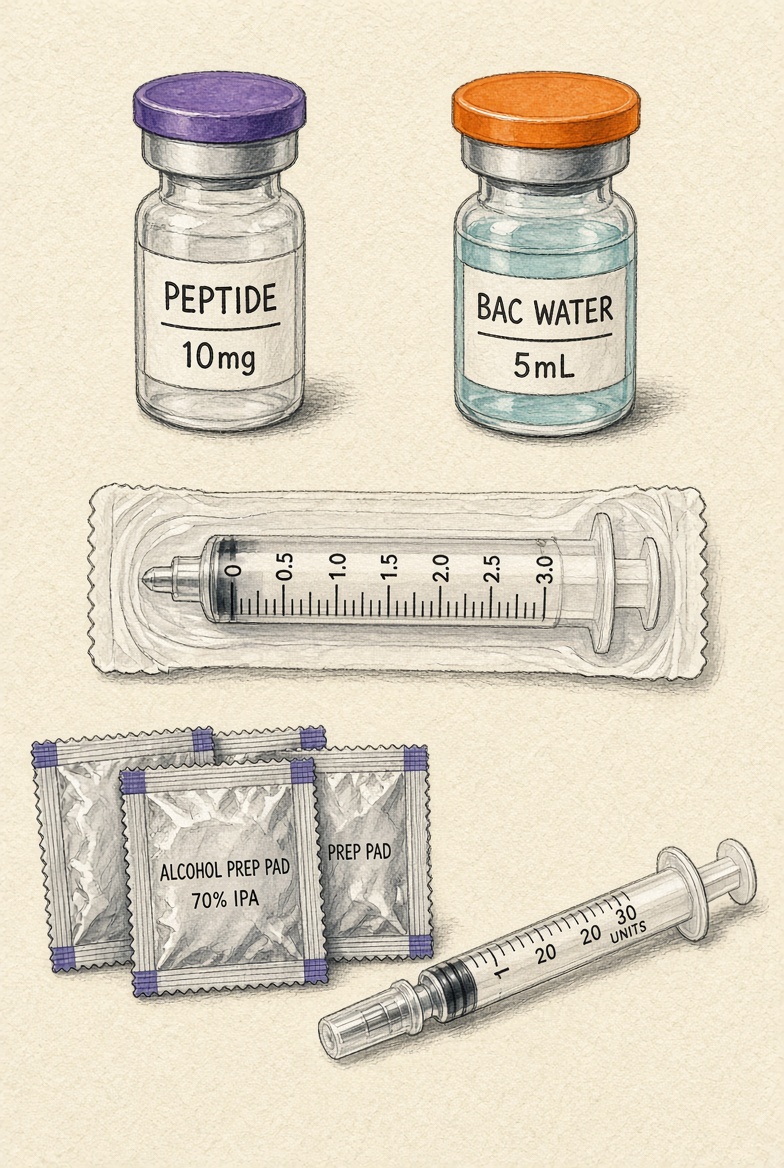
- Peptide vial
- Bacteriostatic water
- Reconstitution syringe (typically sized 1mL to 5mL)
- Alcohol wipes
- Injection syringe (for administering the peptide)
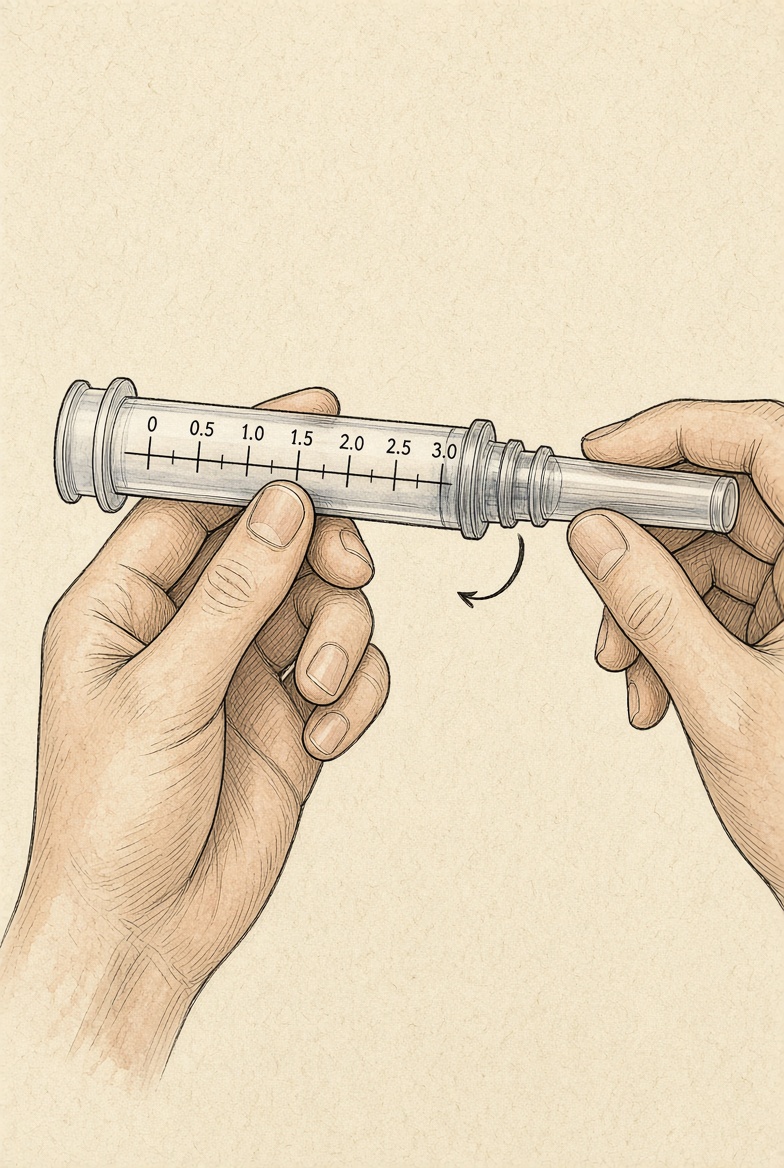
For this guide, we'll use a 3mL reconstitution syringe — but only fill it to the 1mL mark, since that's the amount of bacteriostatic water this example calls for.
The process of peptide reconstitution requires careful selection of the solvent based on the specific properties of the peptide — some peptides are unstable or poorly soluble in plain water and call for a different solvent entirely (0.6% acetic acid is one example). These are low-frequency, peptide-specific instances that this guide doesn't cover. For the large majority of peptides, bacteriostatic water is the right choice, and that's what this guide assumes — see Bac vs Sterile Water for why.
Before you start
Make sure the peptide powder and solvent (bacteriostatic water) that were stored cold are brought to room temperature first. Using the solutions while still cold can interfere with reconstitution.
Remove the plastic cap seals
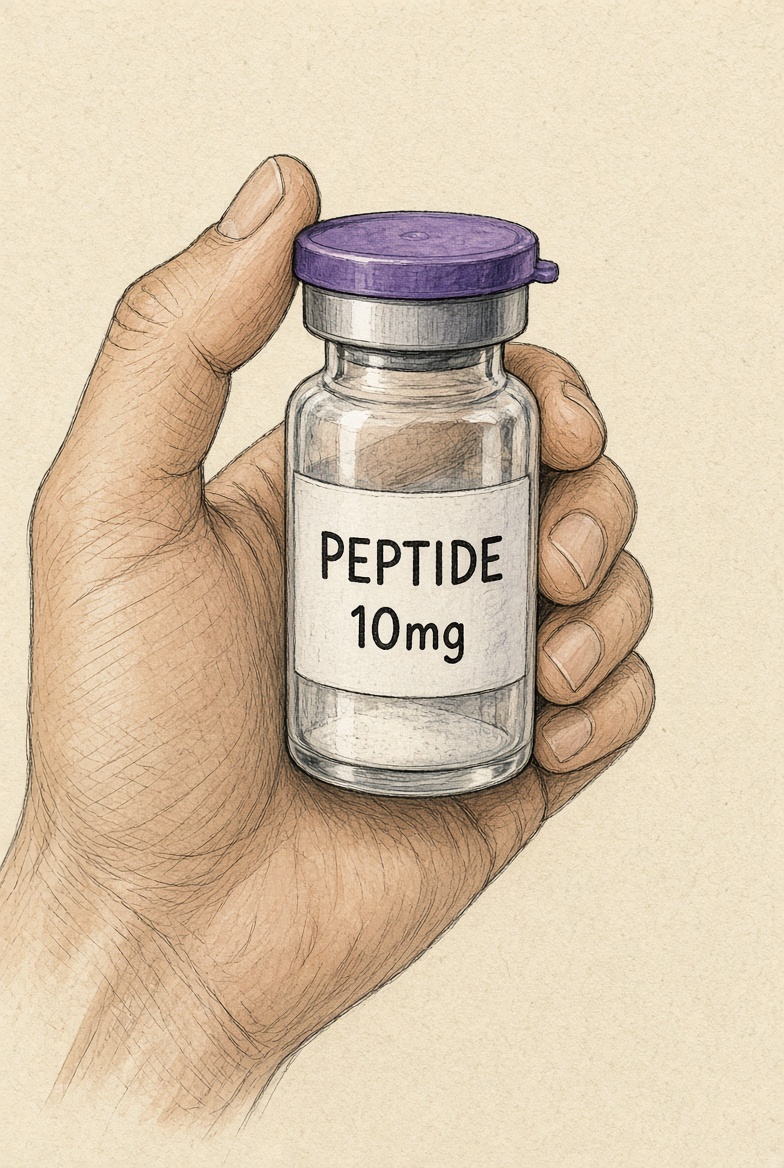
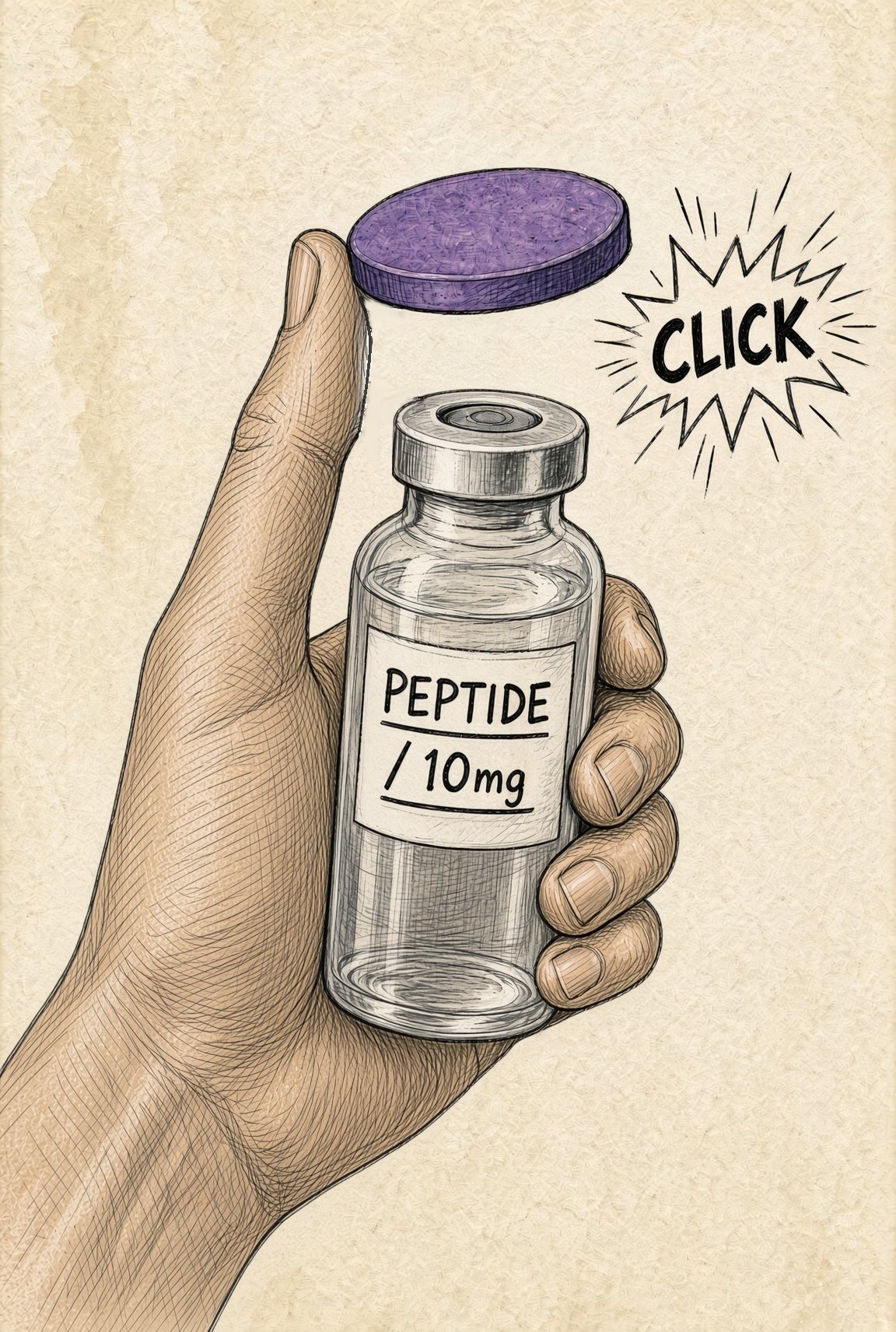
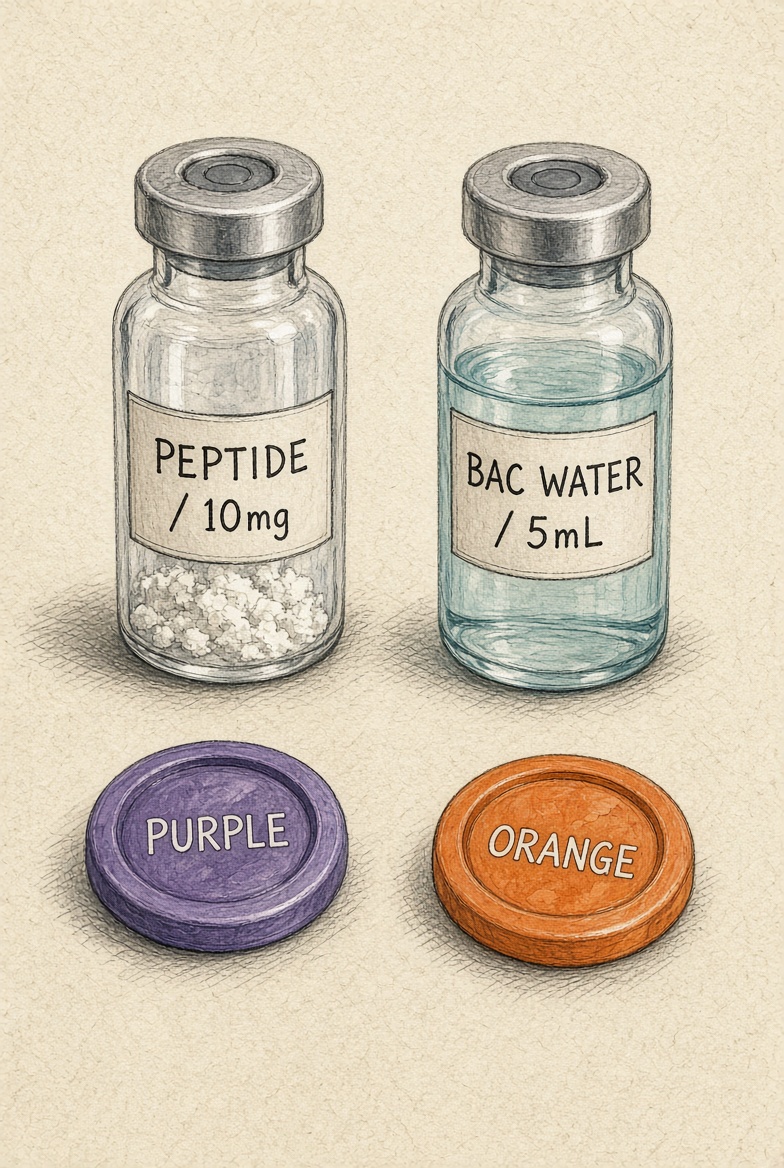
Remove the plastic cap seal from the peptide vial and from the bacteriostatic water vial.
Sanitize
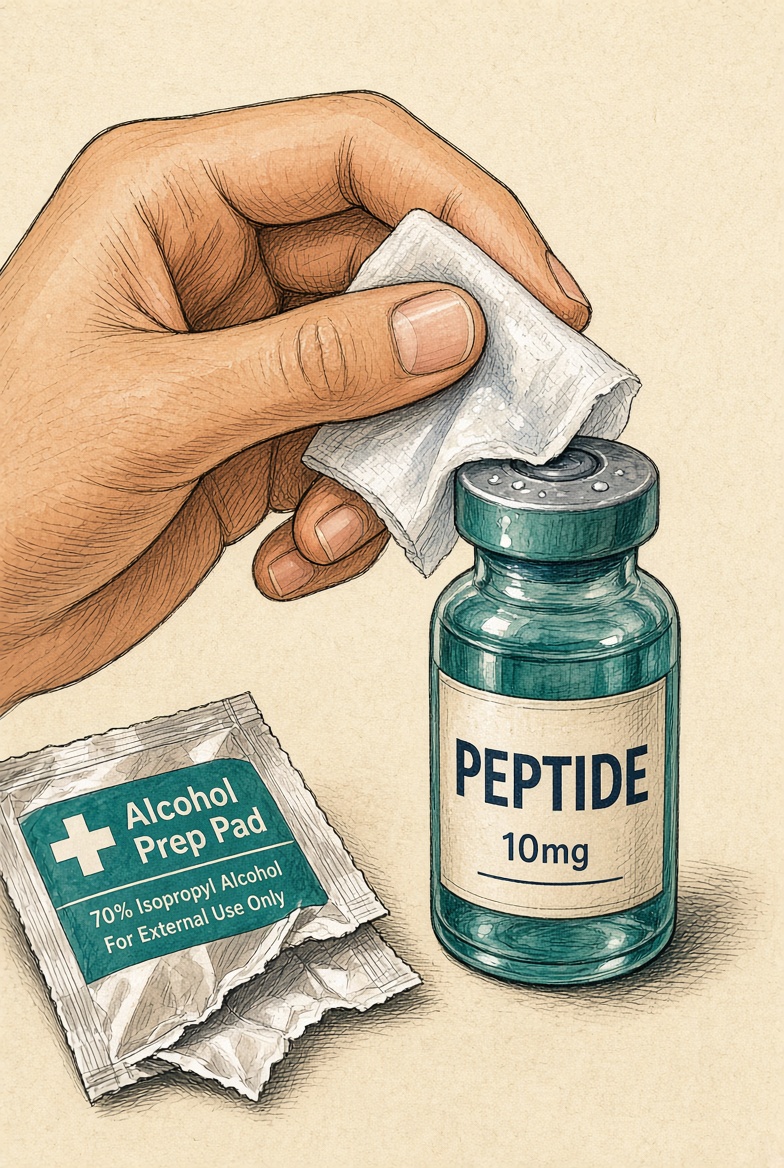
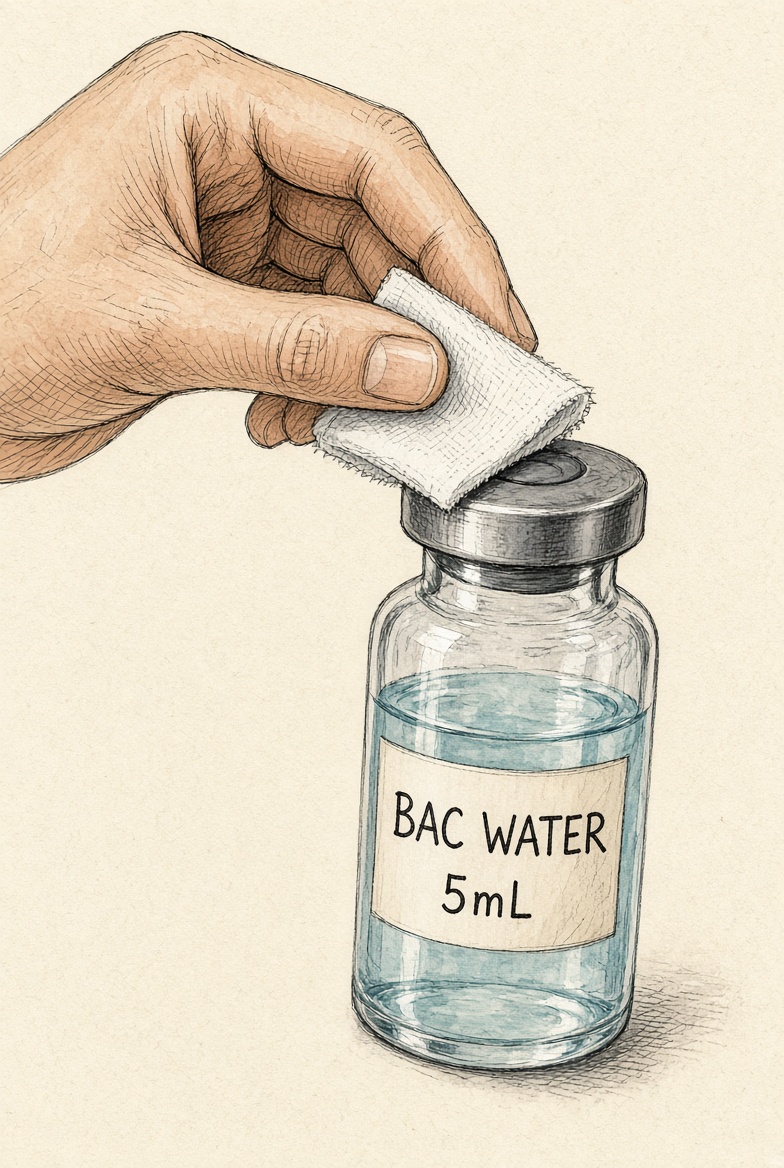
Swab both vials' rubber stoppers with alcohol wipes.
Know your numbers
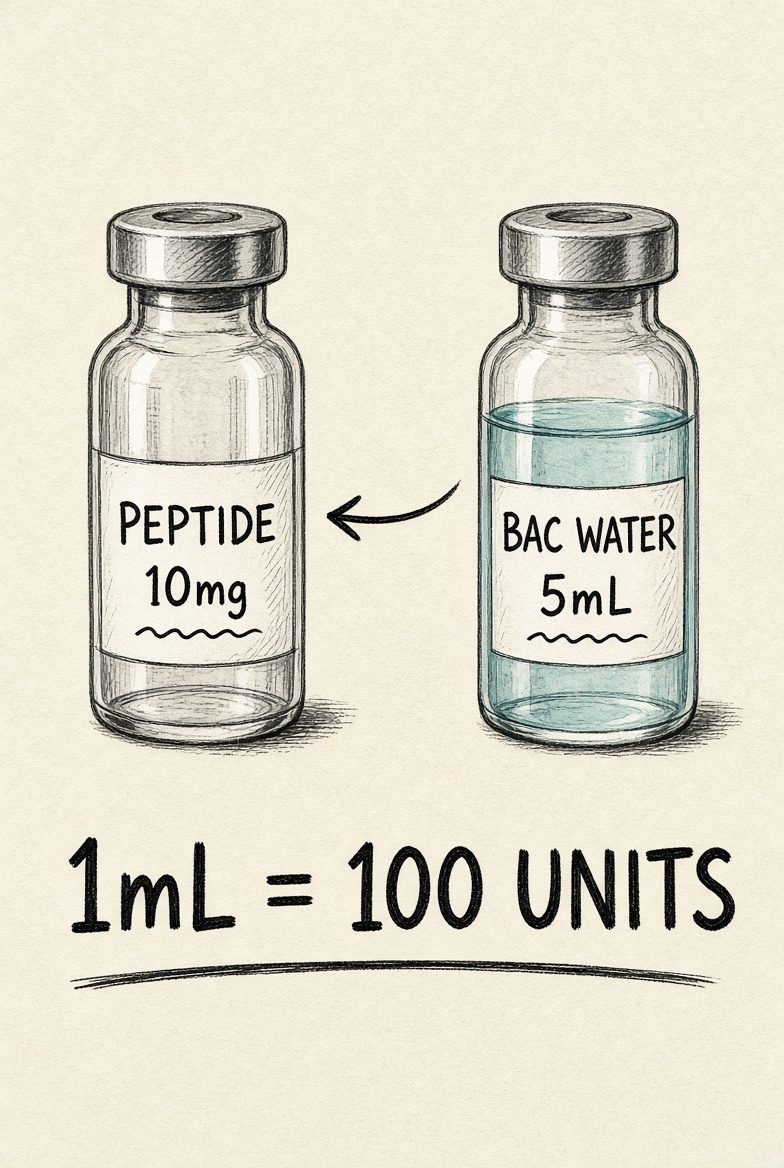
You need two figures: the milligram amount in your peptide vial, and the milliliter amount of bacteriostatic water your reconstitution instructions call for. For this example: a 10mg peptide vial, reconstituted with 1mL (also written as 100 units) of bacteriostatic water.
If your peptide mg amount is different, or calls for a different volume of bac water, you can double-check your math with the Dosage Calculator.
Prepare the reconstitution syringe
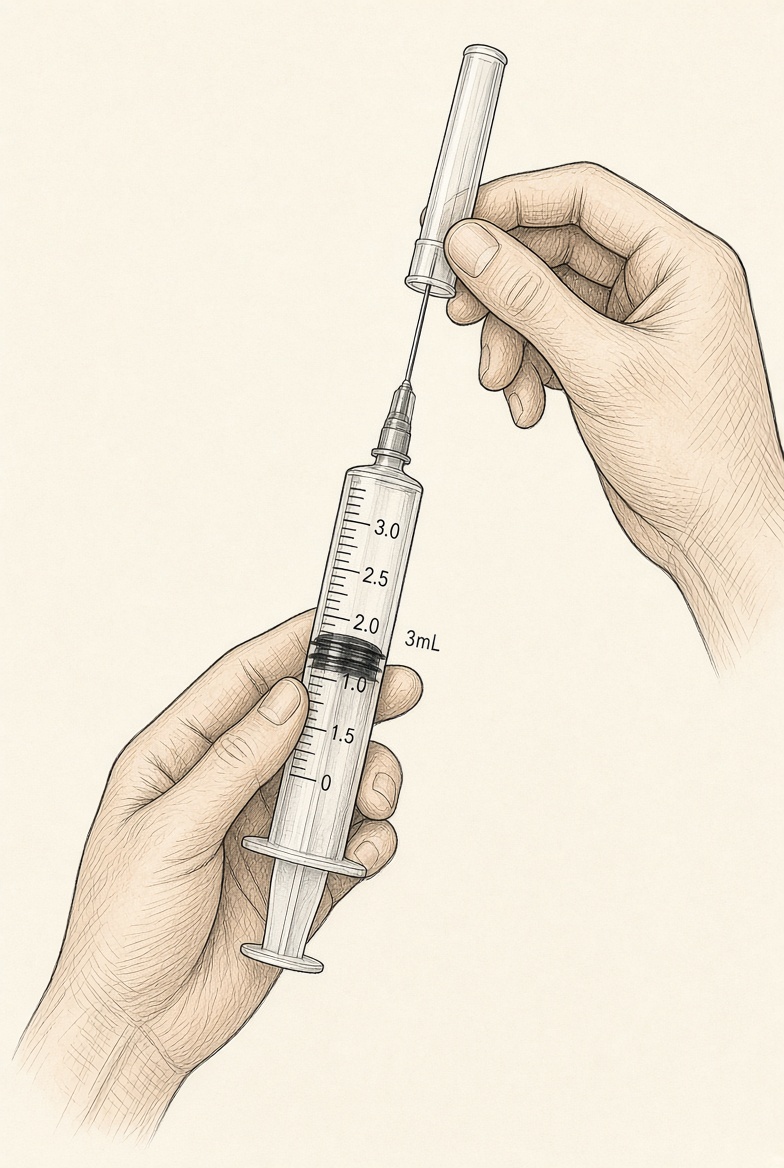
Twist the needle onto the reconstitution syringe, making sure it's secured tightly. Remove the cap from the needle.
Draw the bacteriostatic water
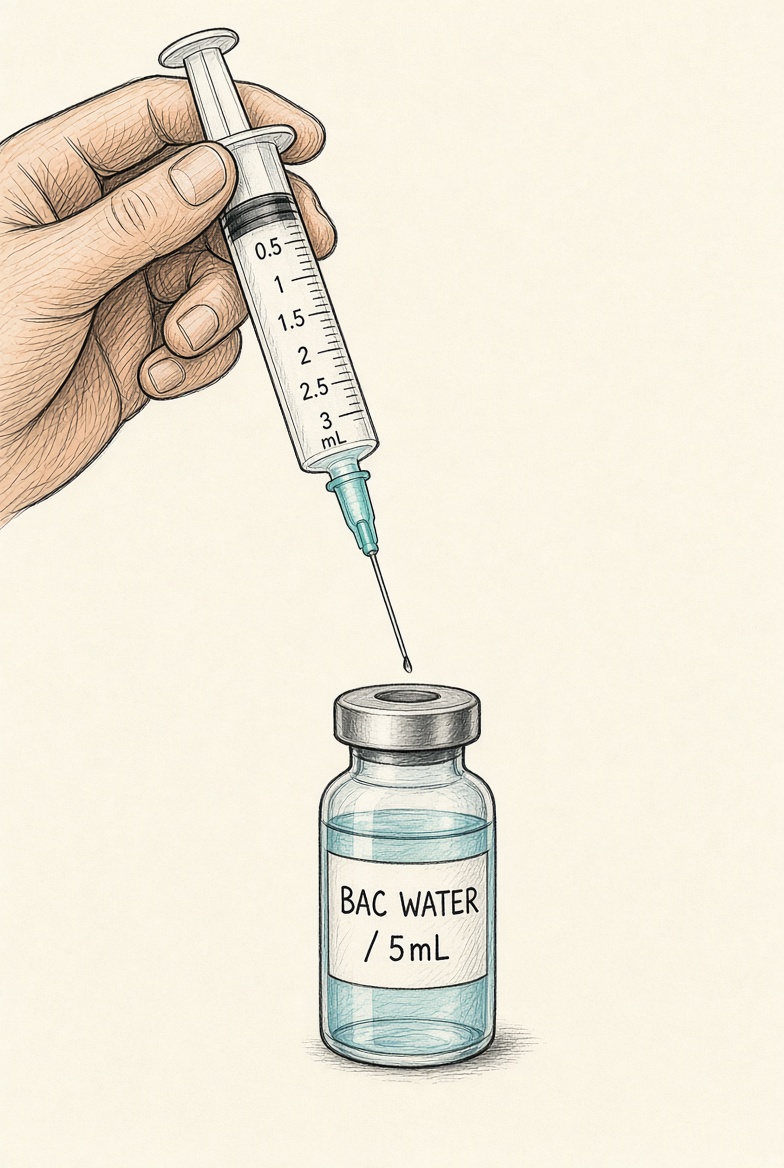
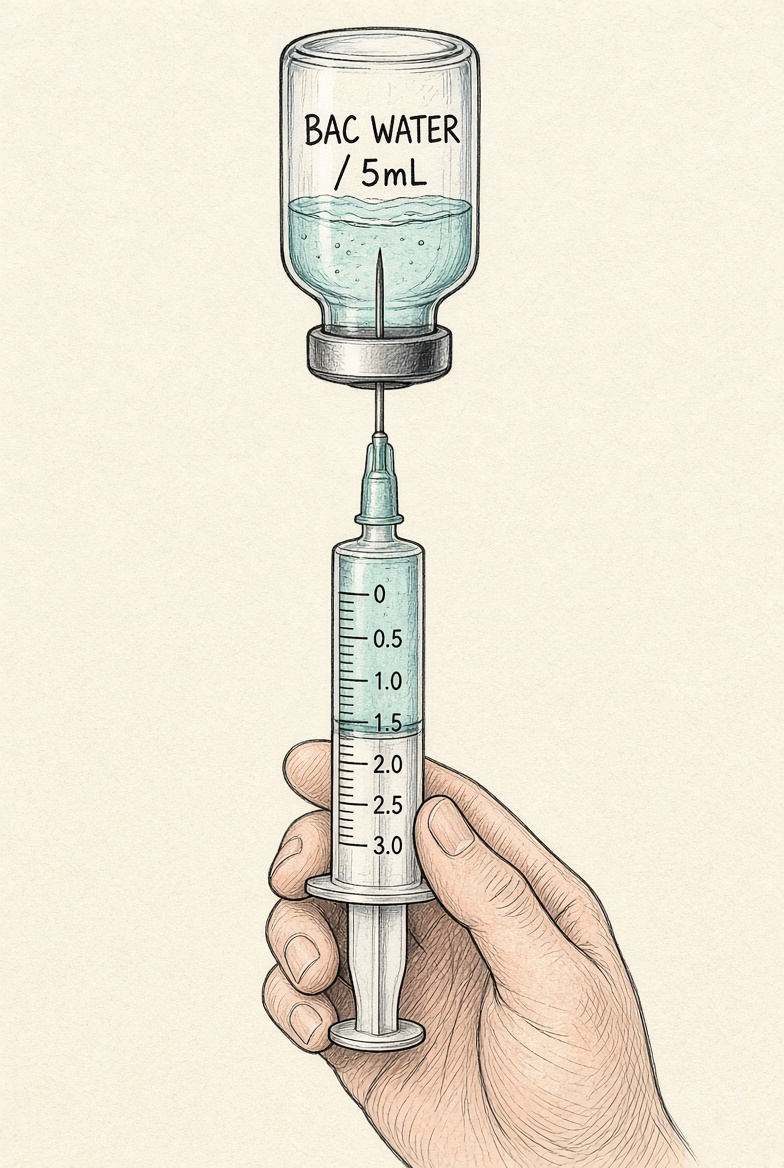
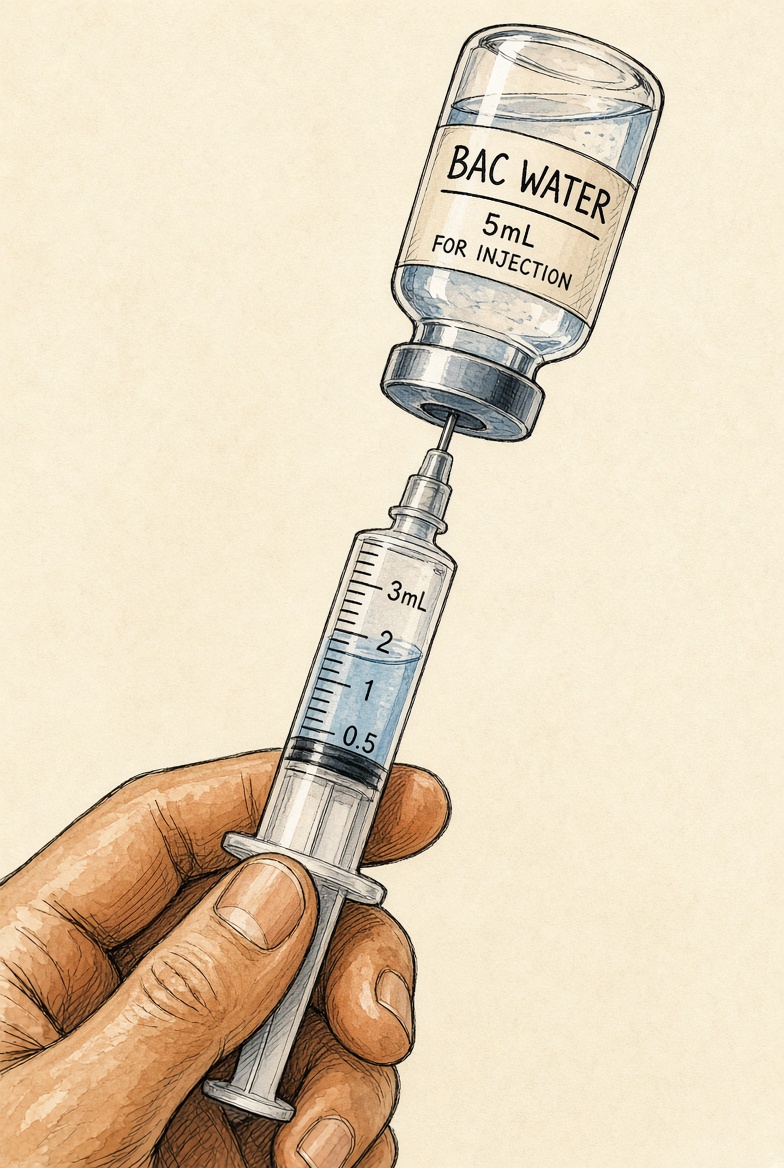
Find the center circle of the rubber stopper on the bacteriostatic water vial and insert the needle straight in, vertically. Once the needle is inside the vial and in the water, turn the vial upside down and slowly pull back the plunger on the reconstitution syringe so the bacteriostatic water flows into it.
Check your fill level
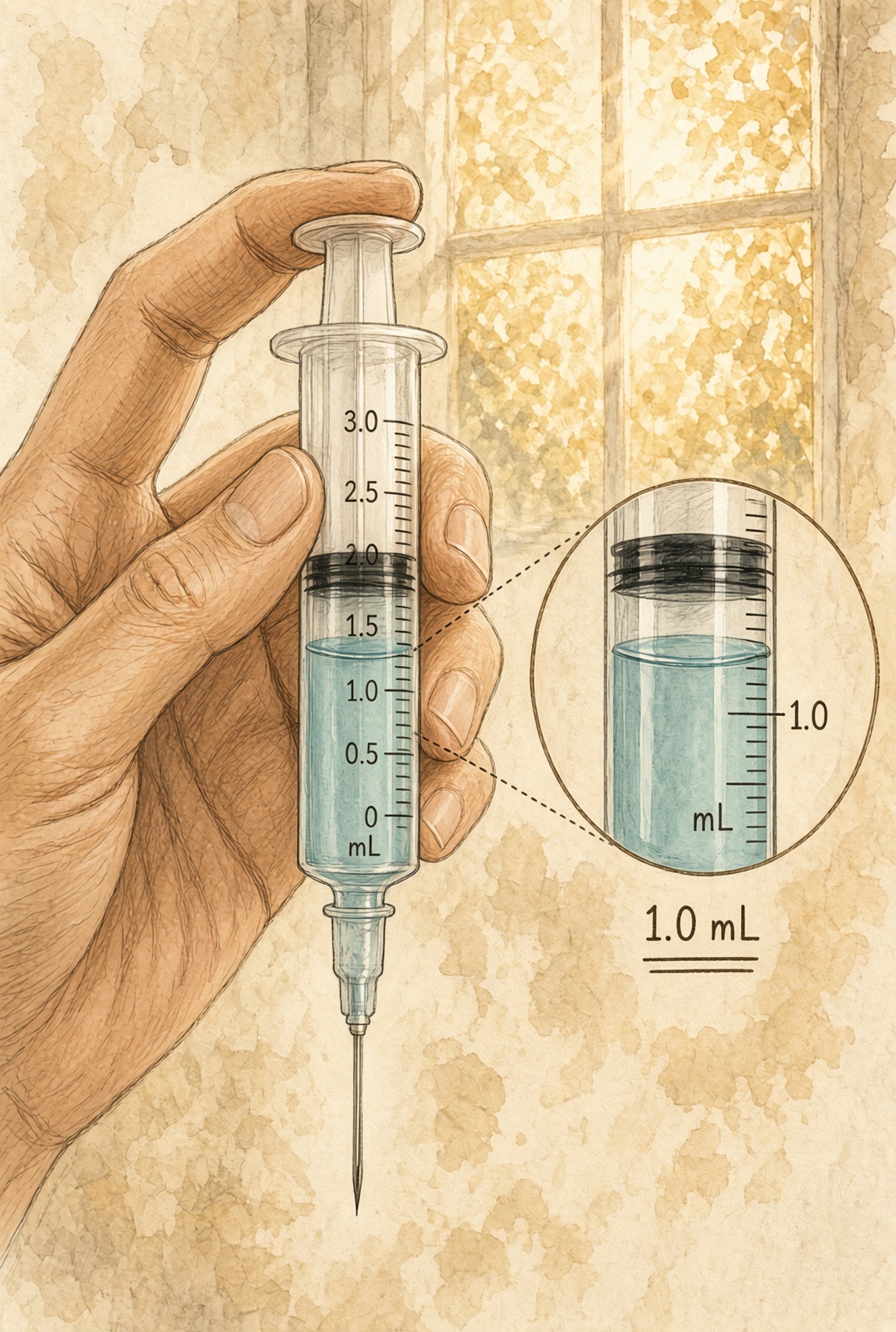
Hold the syringe up to the light — since both the syringe and the water are clear, it can be hard to see how much you've drawn. Make sure you've pulled back far enough to have exactly 1mL (or whatever mL amount your particular peptide calls for) of bacteriostatic water in the syringe.
Withdraw from the water vial
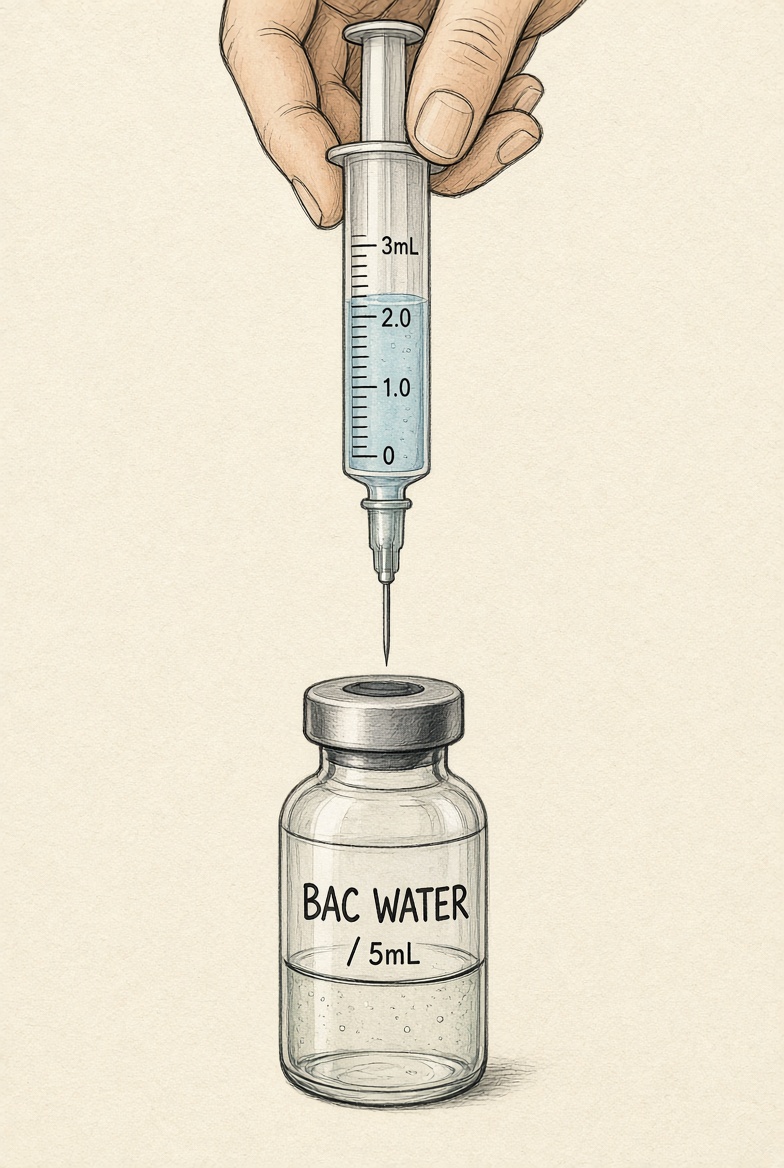
Once you're sure you have the correct amount, pull the needle out of the bacteriostatic water vial's stopper.
Insert into the peptide vial
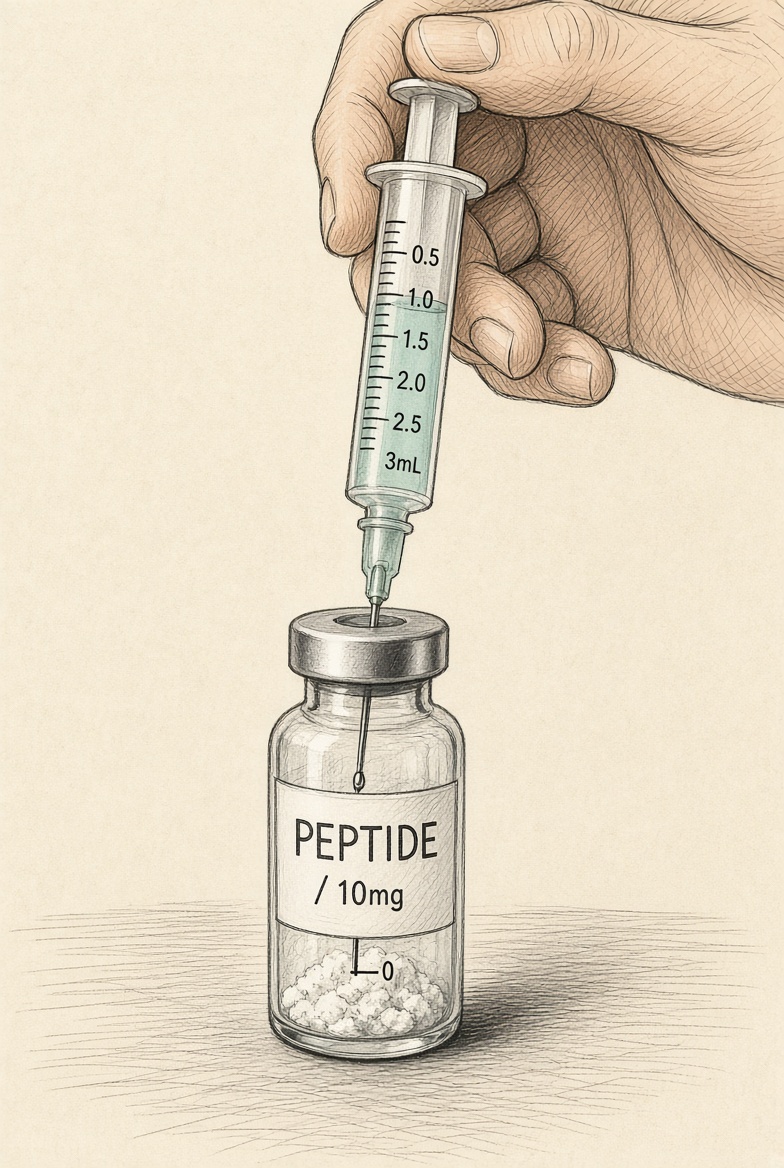
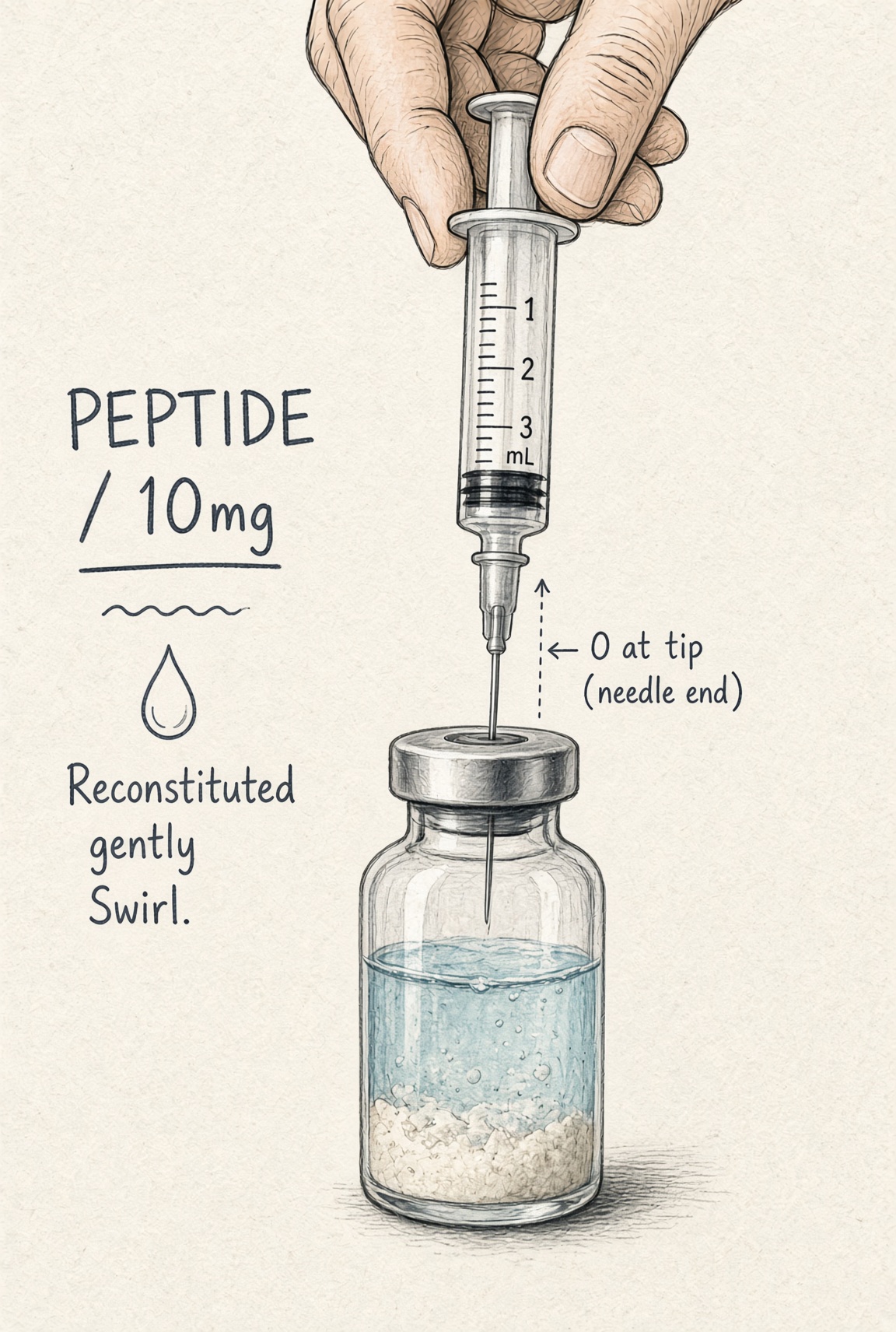
Insert the filled bacteriostatic water syringe into the peptide vial — push the needle through the center circle of the peptide vial's stopper until it's inside the vial.
Add the water
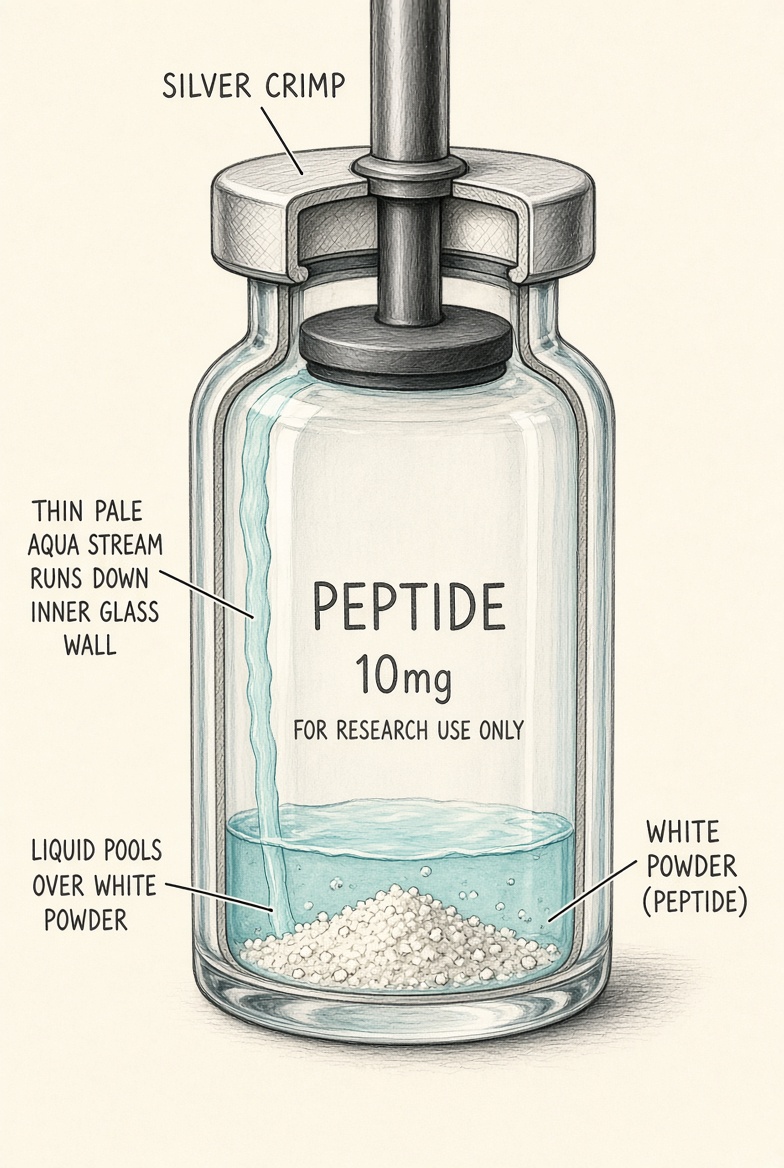
Gently aim the needle toward the side of the vial and slowly depress the plunger, letting the full 1mL of bacteriostatic water flow into the peptide vial along the interior wall.
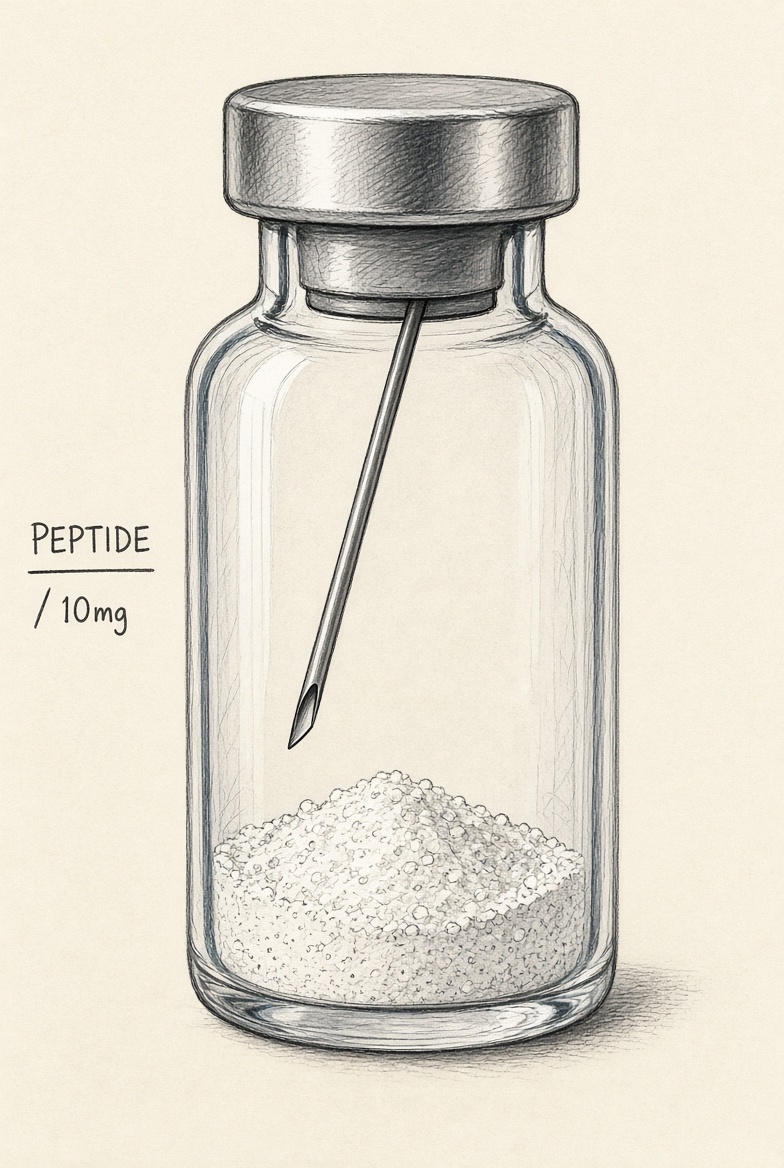
Dispose of the syringe
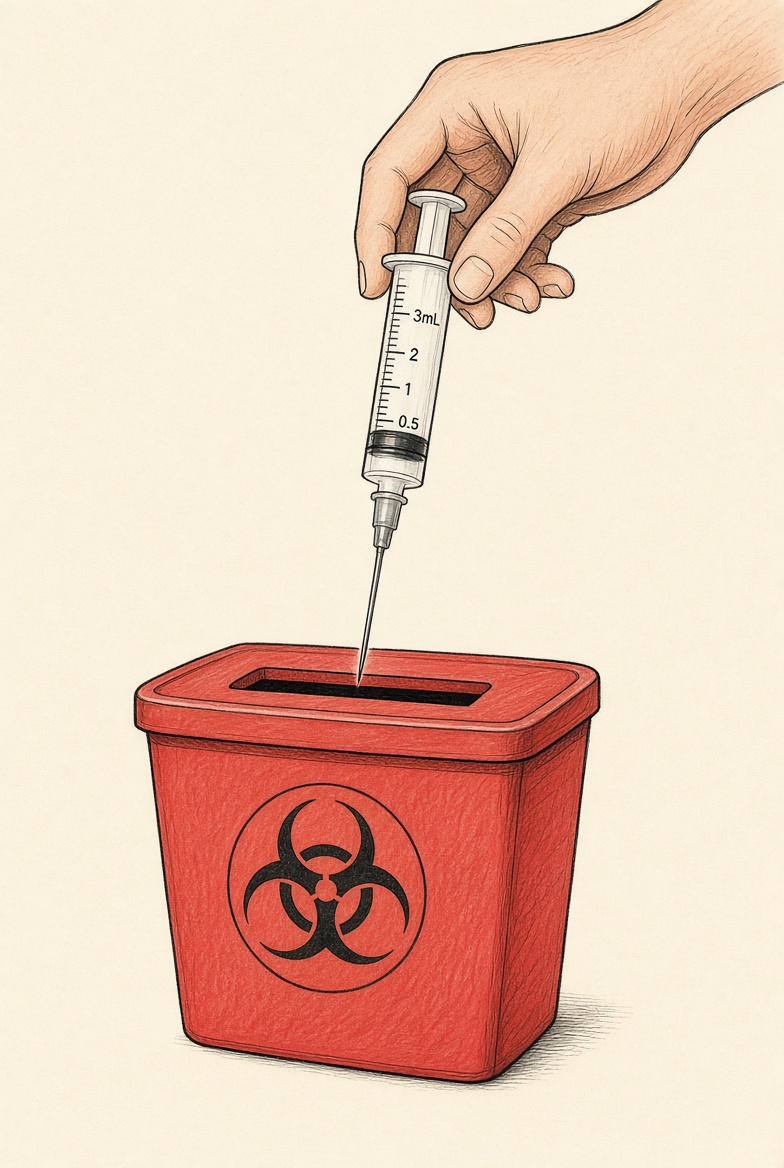
Once all the water has transferred into the peptide vial, withdraw the needle, cap it, and dispose of the syringe in a proper sharps container.
Let it interact
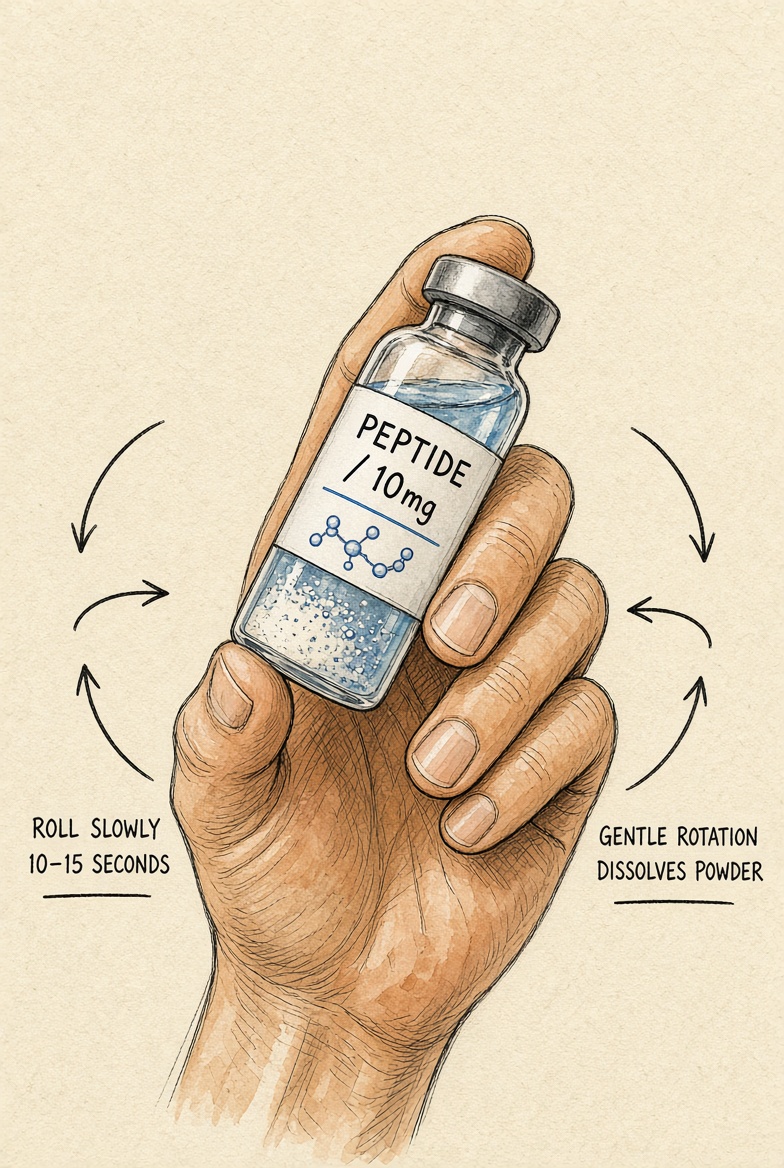
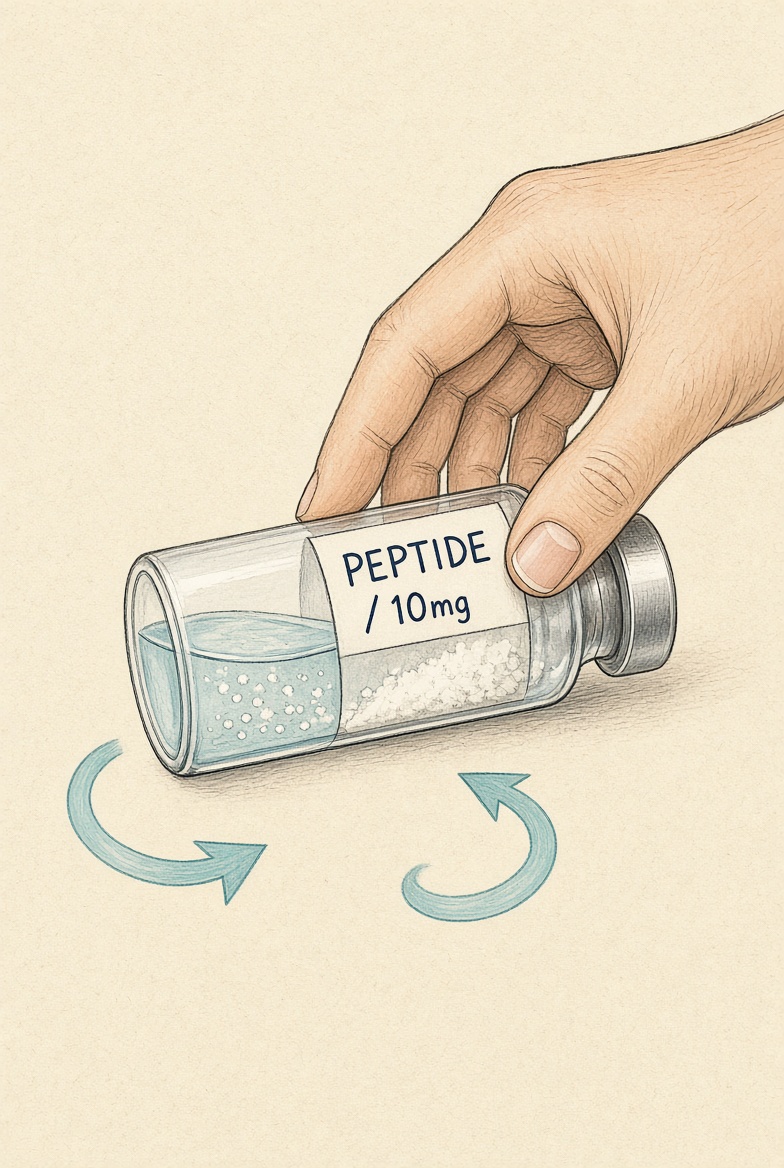
Pick up the peptide vial. You'll notice the water beginning to interact with the lyophilized powder at the bottom. At this point, you can gently rock the peptide vial back and forth to help it along.
Dissolve gently
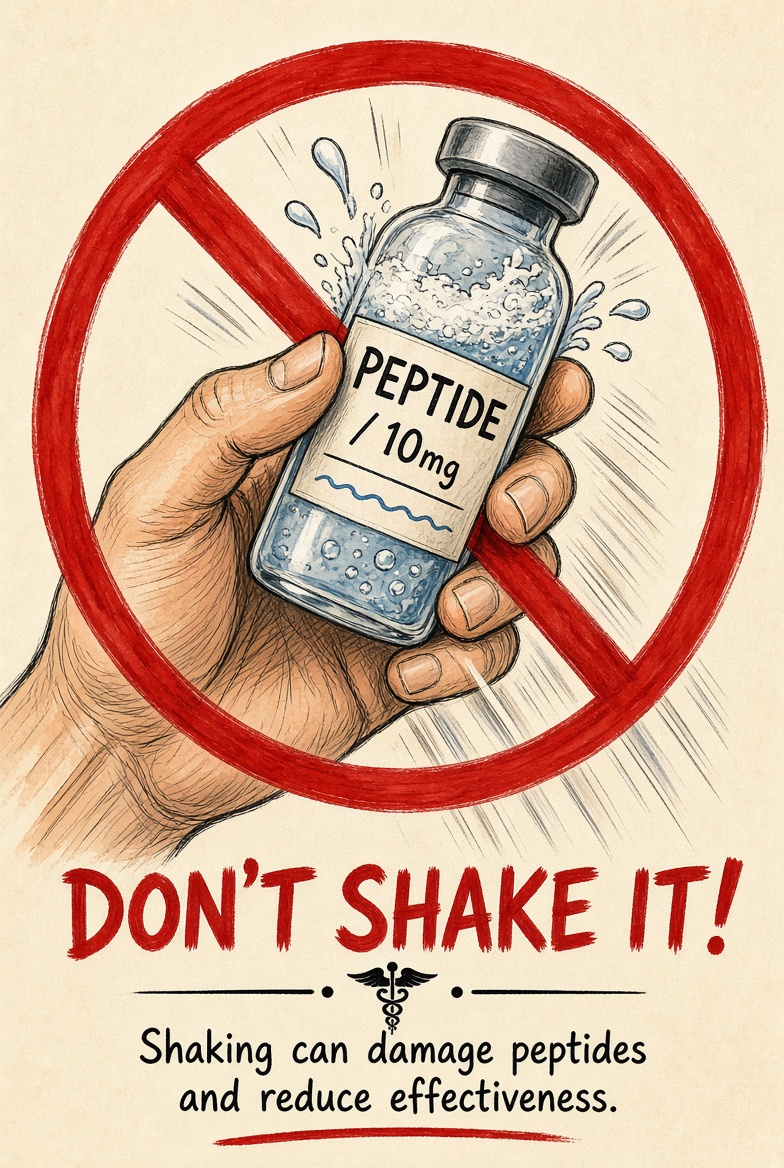
Tilt the vial on its side and gently roll it back and forth between your fingers to help the water dissolve the powder into solution. Do not shake the vial.
Work out the stubborn spots
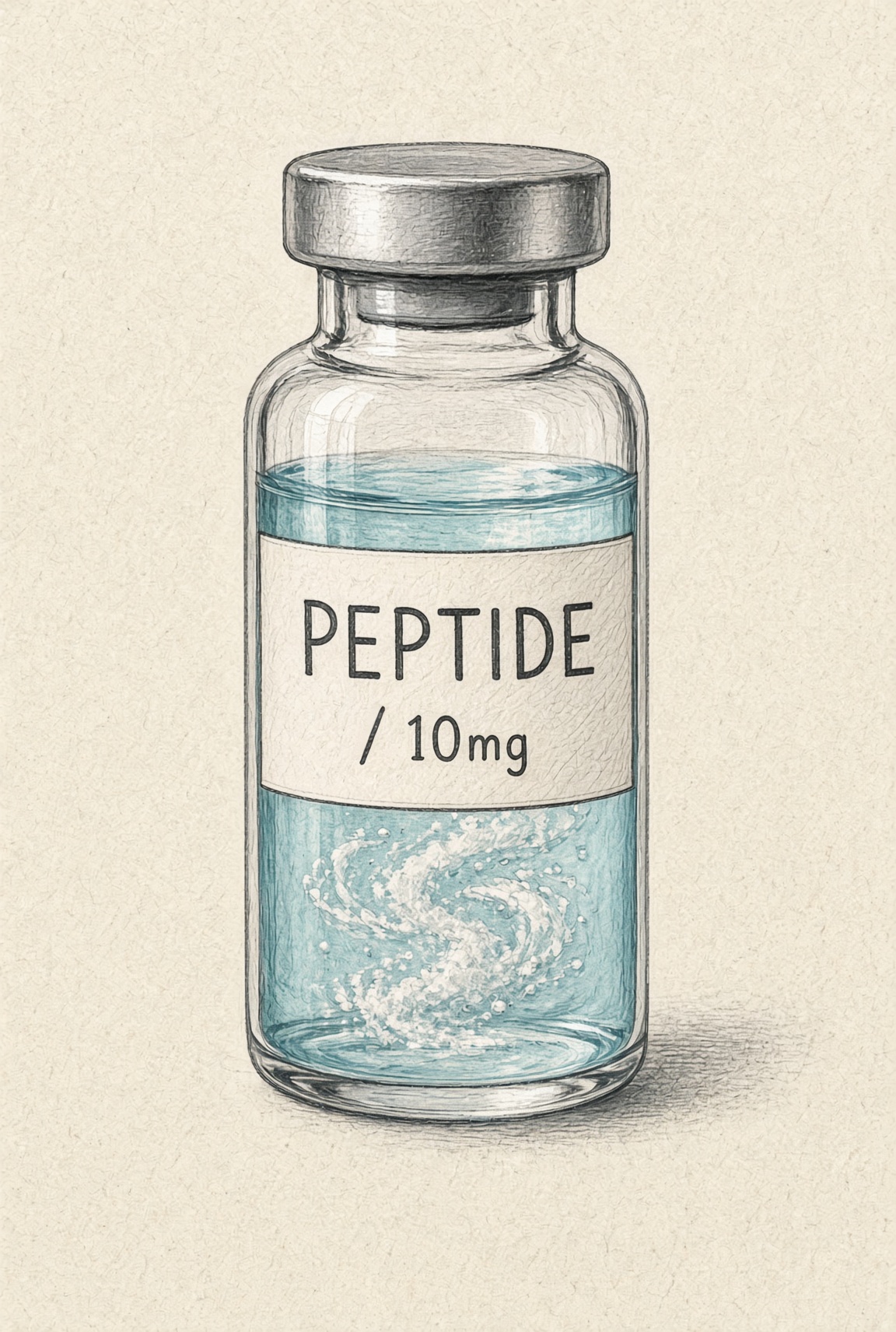
After rolling the vial several times, most of the powder should be dissolved — but a few small clumps or specks may remain in the bottom corners, near the edge. Tilt the vial on its side and gently rock it left and right, like waves washing over those spots.
Let it rest if needed
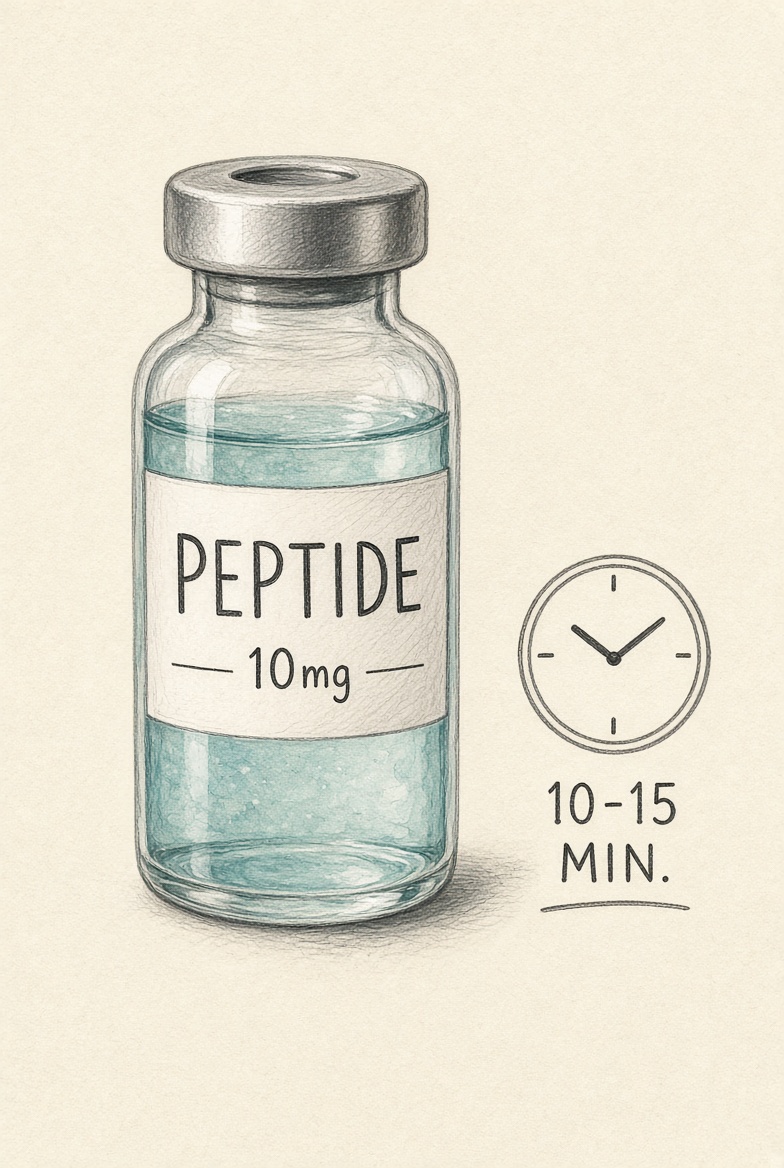
If clumps are still visible after a few minutes of this, stand the vial upright on the counter and let it sit for 10–15 minutes. This usually finishes dissolving everything.
Ready to use
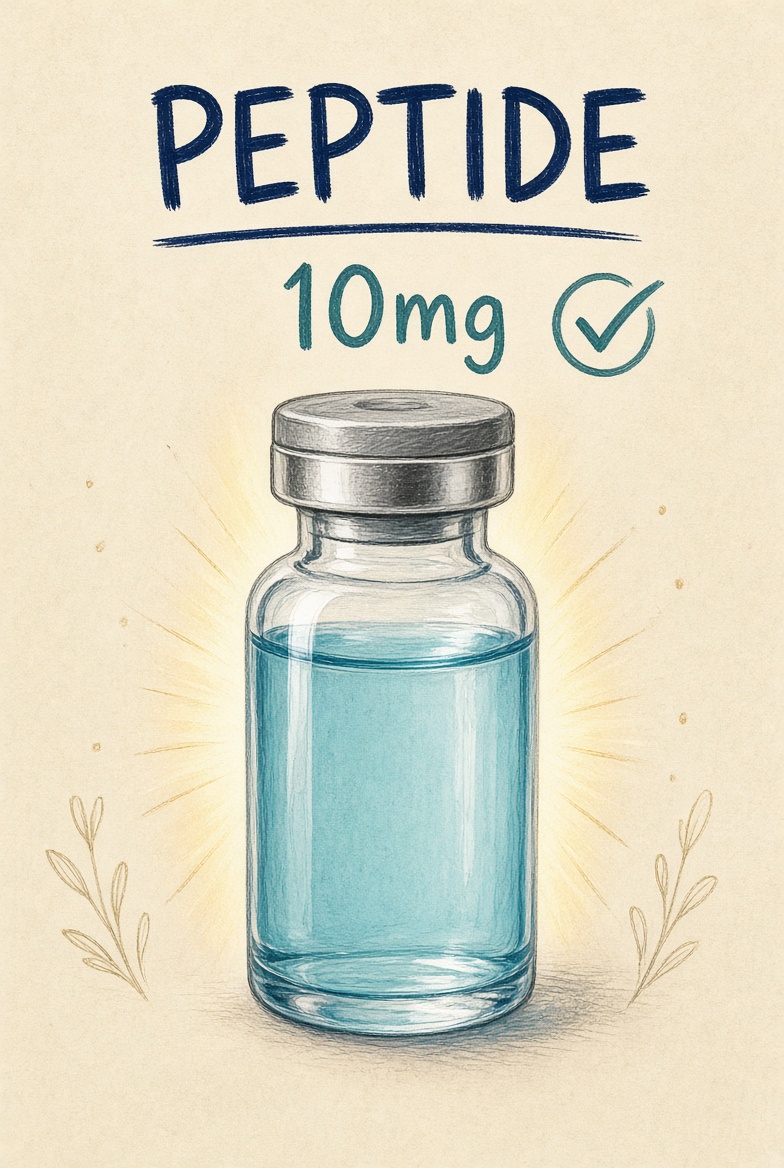
Once your peptide solution is clear with no visible specks of undissolved powder, your vial is now ready for use.
General rule of thumb: how much bacteriostatic water to add
The walkthrough above used one specific example (a 10mg vial, 1mL of bacteriostatic water) to keep the steps concrete. Most peptides follow a similar pattern based on vial size — use this table as a general starting point for other peptides, not as a replacement for the specific instructions that came with your vial.
| Peptide vial amount | Bacteriostatic water |
|---|---|
| 2mg–10mg | 1 mL |
| 20mg | 2 mL |
| More than 20mg (GLOW, KLOW, NAD+) | 3 mL |
Once you know your vial amount and water volume, the Dosage Calculator will work out exactly how many syringe units to draw for a given dose.
Note: this table is generic guidance. There are instances where you'll want to use a larger volume of bacteriostatic water — for example, when the dose amount is in low mcg amounts. See the relevant dosing card in the Peptides Guide for your specific peptide.
Storage
- Un-reconstituted peptides (no bacteriostatic water has been added): store in the freezer for up to 12–24 months.
- Reconstituted peptides (bacteriostatic water has been added): store in the refrigerator — take out for use, then place back in the refrigerator. Typical storage life is 4–6 weeks in the refrigerator.
- Never freeze peptides that have been reconstituted (bacteriostatic water has been added).
This guide is for educational purposes only and is not medical advice. Always consult a licensed medical practitioner before reconstituting or using any peptide.